Pelvic Floor Therapy
Pelvic floor dysfunction is often associated with pregnancy and postpartum, but it can affect anyone with a pelvic floor, at any stage of life — from runners or weight lifters with no history of pregnancy to women navigating menopause. Changes to the pelvic floor can contribute to symptoms such as pelvic pain or pressure, urinary or bowel changes, painful intercourse, or difficulty returning to exercise and other activities.
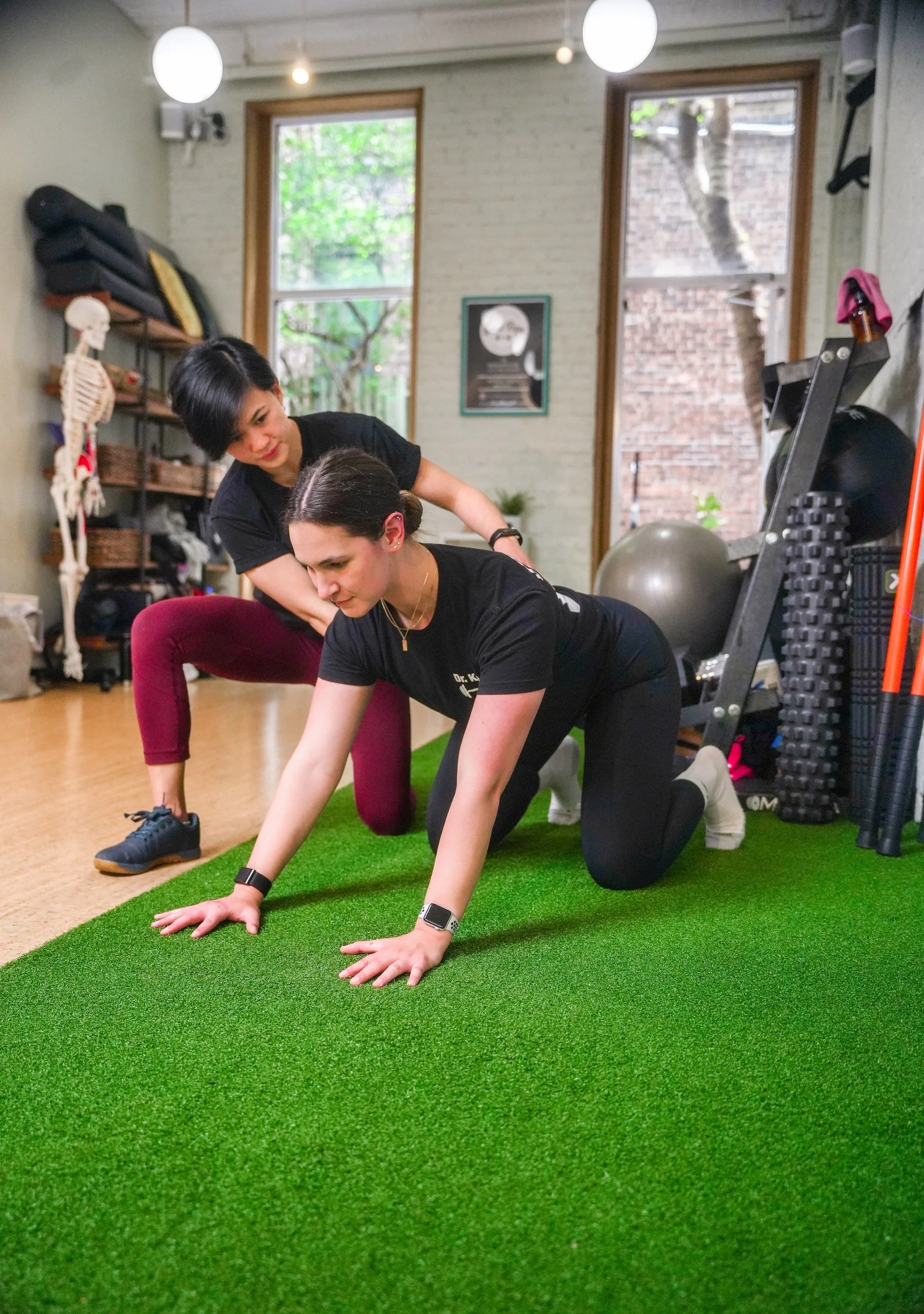
Physical therapy can be an effective way to address pelvic floor symptoms and support your body through the prenatal, perinatal, and postpartum periods. At Good Reps, we take a holistic approach to pelvic health, looking at how the pelvic floor works together with the rest of your body to support movement, strength, and function.
Here are some of the ways that physical therapy can help address pelvic floor health:
Strengthening and coordination: We can develop a personalized program to improve pelvic floor strength, coordination, and the ability to appropriately contract and relax these muscles.
Mobility and movement: We can address mobility and movement throughout the hips, pelvis, spine, and surrounding musculature to help improve overall function.
Manual therapy: Physical therapists can use hands-on techniques to address muscle tension, pain, and restrictions that may be contributing to your symptoms.
Return to activity: We can help you safely return to running, lifting, exercise, sex, and other activities that are important to you throughout pregnancy and postpartum.
Our Doctors of Physical Therapy can help you better understand your changing body, address symptoms, and build the strength and confidence to keep doing the things you love throughout every stage of your reproductive journey.